
You Don't Have to Know What's Coming to Prepare for It

There is a strange tension built into planning. We plan because we don't want the future to catch us completely unprepared, but the future is exactly the thing we can't see clearly enough to plan perfectly. That can make planning feel like an exercise in guessing. How much will it cost? When will it happen? What will we need? What if we save for the wrong thing? What if our priorities change? What if the plan we make today doesn't fit the life we're actually living two years from now? After a while, uncertainty itself can become a reason not to make the plan at all.
Back-to-school season gives us a fairly ordinary example. There are genuine surprises, of course, but much of what catches us financially isn't completely unexpected. We knew school was coming. We knew schedules would change. We knew there would probably be clothes, activities, transportation, lunches, fees, or some combination of expenses we hadn't encountered during the summer. What we didn't necessarily know was exactl...
The Story Behind the Spending

Have you ever decided you were going to stop doing something with money and felt completely confident about it?
Maybe you were done eating out for a while. You were going to stick to the grocery list, stop making impulse purchases, cancel a few subscriptions, or try a no-spend challenge because you were tired of watching the same pattern repeat itself. For a while, it may have worked. Then life got busy, the routine changed, you had a hard day, or something caught your attention at exactly the wrong moment, and suddenly you were doing the thing you had been so certain you were finished doing.
What usually makes that moment even more frustrating is the conversation that follows in our own heads. We tell ourselves we knew we wouldn't stick with it. We decide we must not have enough discipline. We wonder why we keep doing the same thing even when we know better.
That's often when we decide the answer must be a stronger rule. Maybe we need to cut the category completely, tighten the bu...
Before You Make a Better Plan, Take a Better Look

There are certain times of year when routines become visible again.
Back-to-school season is one of them. Even if nobody in your household is heading into a classroom, you can usually feel the shift. Summer begins winding down. Schedules change. Traffic patterns change. Activities return. The pace of everyday life feels a little different.
What I find interesting about seasons like this is that they tend to reveal things we weren’t necessarily thinking about a few weeks earlier.
Maybe the grocery budget suddenly feels different because lunches are being packed again. Maybe you notice how much driving a new schedule requires. Maybe mornings feel rushed in a way they didn’t during the summer. Or maybe nothing dramatic has changed at all, but the change in season gives you enough of a pause to notice something that has quietly been bothering you for a while.
Our instinct when we notice something isn’t working is often to fix it.
We look for a better budget, a better routine, a better...
The Best Christmas Gift You May Give Yourself This Year

When people think about Christmas gifts, they usually picture something wrapped in paper and placed under a tree. They think about children opening presents, family members exchanging gifts, stockings filled with small surprises, or a thoughtful package handed to someone they love.
But one of the best Christmas gifts you may give yourself this year will not be wrapped at all.
It may be the peace that comes from planning before the pressure arrives.
That is why we talk about Christmas in July. Not because we are trying to rush the season. Not because anyone needs to start playing Christmas music in the middle of summer. Not because the holiday needs one more layer of activity or expectation. We talk about Christmas in July because July gives us something December rarely does.
It gives us space.
By the time December arrives, the emotions are louder. The stores are full. The calendar is crowded. The expectations feel heavier. The invitations come quickly. The gift ideas multiply. Th...
What Are You Practicing Before You Need It?

Some moments feel like they arrive all at once.
The paycheck hits the account, and suddenly there are decisions to make. The grocery cart starts filling up, and suddenly the total begins to matter. A child gets a first job, and suddenly years of conversations about money become more than theory. An unexpected expense shows up, and suddenly we find out whether there was any margin.
It is easy to think those are the moments that matter most. And in one sense, they do matter. But they are rarely where the story begins. Most of the time, the moment simply reveals what has already been practiced.
That can feel convicting, but I think it can also be comforting. Because it means stewardship is not built only in big decisions. It is built in ordinary ones. It is built in the small moments when we slow down enough to pay attention. It is built when we explain a decision instead of rushing past it. It is built when we look at what we already have before buying more. It is built when we practi...
The Reset Starts with What You Are Willing to Face

The middle of the year is a natural place to pause.
By now, the year is no longer new. The goals we named in January have either found a rhythm, faded into the background, changed shape, or been interrupted by real life. Some things may be working better than expected. Other things may feel heavier than we hoped.
That does not mean the year is lost.
It means it is time to look honestly.
A mid-year reset is not a punishment. It is not a report card. It is not a chance to prove how far behind you are. It is an invitation to stop long enough to ask, “What needs attention before the second half of the year keeps moving?”
Avoidance Makes Pressure Grow
Most of us do not avoid money because we do not care.
We avoid it because we care and we are afraid of what we might find.
The number might be bigger than we thought. The progress might be slower than we hoped. The conversation might feel tense. The plan might need to change. The spending might reveal something we do not want to admit....
What Would Actually Change Your Financial Situation?

When money feels tight, it is natural to think about the number first.
More income. A raise. A bonus. A windfall. A new job. A lower payment. A break in the pressure. Those things can feel like the obvious answer because they seem like they would create immediate relief.
And sometimes, more money really does help.
If someone does not have enough income to cover basic needs, that matters. If the gap between what is coming in and what is required is too wide, more income can reduce pressure, create options, and make daily life more stable. It would be unkind and unrealistic to pretend that money never solves real problems.
But that is not the whole story.
Because many people are not only dealing with a math problem. They are also dealing with habits, patterns, expectations, avoidance, convenience, and behaviors that keep shaping the same outcome no matter how much money comes in.
More Money Can Amplify What Is Already There
More money does not automatically create more peace.
It ...
Why Comparison Makes Travel Spending Harder

Comparison has a way of moving the finish line.
Give Yourself Permission to Use What You Prepared

One of the strange things about saving is that using the money can still feel like losing progress.
You worked to set it aside. You watched the balance grow. You may have even felt a little more secure just knowing it was there. Then the moment comes when the money has to move out of savings and into the thing it was meant to cover, and even if that was the plan all along, it can still feel uncomfortable.
That feeling makes sense. Savings can start to feel like the goal instead of the tool. The number becomes familiar, and once you see it sitting there, part of you may want to protect it from ever going down. But if the money had a purpose, using it for that purpose is not a failure. It may be the evidence that the plan worked.
Savings Is Not Pointless Because It Gets Used
It is easy to feel discouraged when you build up savings and then something comes along that requires you to use it.
A car repair shows up. Property taxes are due. A planned trip gets close enough that money nee...
The Thing You’re Avoiding Isn’t Getting Smaller
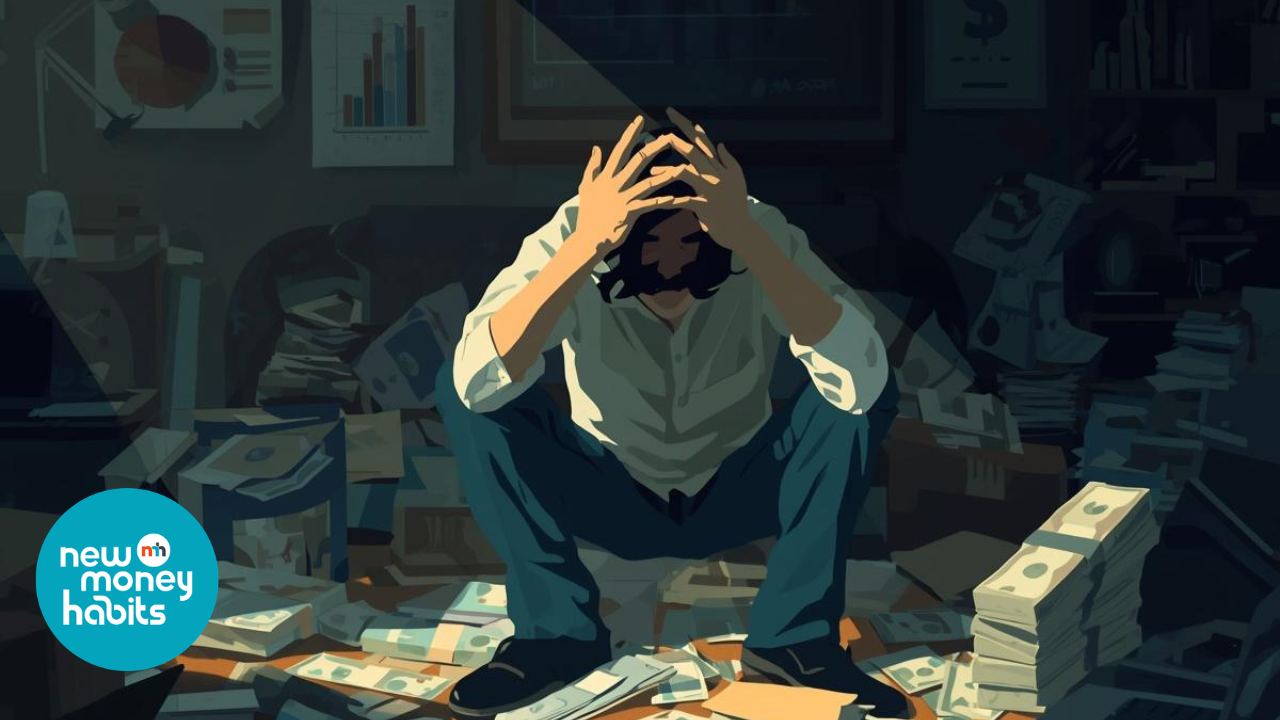
Avoidance can make a money problem feel quieter for a little while, but it rarely makes it smaller.
Most of the time, the thing we are avoiding grows in our mind because it stays undefined. We know something feels off, but we do not know exactly how much, how often, how urgent, or how manageable it really is. So the feeling gets louder, even while the facts remain unclear.
That is one reason money can feel heavier than it actually is. Not because the situation is easy, but because carrying it only in your head gives it room to grow in every direction.
Why We Look Away
Avoidance usually makes sense in the moment.
If opening the account, checking the balance, or writing everything down feels like it might confirm your worst fear, it is understandable that you would rather not look. The problem is that not looking does not remove the pressure. It just keeps the pressure vague.
And vague pressure is hard to respond to.
It is hard to make a clear decision around a number you have not...
